Signs Your Guillotine Blade Needs Replacing (And What It’s Costing You)
You never truly realise your guillotine blade has worn out. There’s no error message, no alarm, no sudden failure — just a slow, quiet degradation that chips away at the quality of every cut your machine makes. By the time most UK print businesses notice something is wrong, the blade has already been costing them in wasted stock, poor results, and client dissatisfaction.
The reality is that guillotine blades are consumables. They wear with use, and once they pass a certain point, they stop doing their job properly. Knowing when to act — and understanding what ignoring it is costing you — is essential for any print shop serious about quality and efficiency.
In this blog, we cover how to spot a failing guillotine blade, what it’s actually costing your business, how cutting sticks affect blade life, and when to replace versus resharpen.
How a Guillotine Blade Works
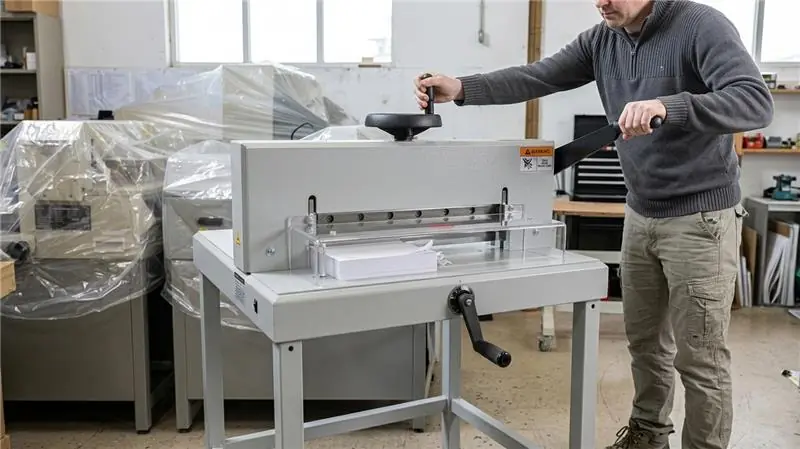
A guillotine blade drives a hardened steel cutting edge through a stack of paper in a single and precise stroke. The blade meets the cutting stick set onto the cutting table. This strip of hard polymer helps absorb the impact and protects both the blade and the machine bed from any damage.
Both the guillotine blade and the cutting sticks work together as a pair. The quality of the results is excellent when both products are in good condition, as it delivers a clean, precise cut with minimal resistance. However, as one of these components starts to wear down, the quality also starts to deteriorate. This is why it is important to monitor both your guillotine blade and the cutting sticks together instead of separately, as this is a much smarter approach to machine maintenance.
Understanding the relationship between these two products also helps explain why the blade may seem fine but still causes cutting problems. If your cutting sticks have worn out, even then, a sharp guillotine blade cannot deliver a clean result.
Warning Signs Your Guillotine Blade Needs Replacing
Here are some of the most common signs that your guillotine blade is past its best and now needs attention:
- Ragged or Feathered Edges on Cut Paper — A sharp Guillotine blade normally produces a clean and smooth edge. When its blade begins to dull, it starts to drag and tear the fibres of the paper rather than slicing cleanly through them. As a result, you get a rough and feathered edge, which is entirely unacceptable for professional print work and is a direct reflection of the type of quality finishing your print shop produces.
- Increased resistance During Cutting — If you notice that your guillotine is requiring more force or pressure to cut through the same stocks of paper it once handled with ease, it’s an indication that the guillotine blade has worn out. On electric and hydraulic machines, you may notice the motor working harder or cuts taking longer than usual.
- Paper Shifting or Dragging During the Cut — A dull guillotine blade can catch and drag the paper as it descends, causing the stack to shift mid-cut. This leads to inaccurate cuts and misaligned edges, which is a particularly frustrating problem when you’re working on tight tolerances for a client’s job.
- Visible Nicks, Chips, or Uneven Wear on the Blade — Make sure to inspect your guillotine blade regularly. Any nicks and chips which are caused by cutting through staples, cardstock, or other hard materials accidentally will produce visible lines or rough edges across every cut. Even minor damage to the edges of the blade can result in consistent and repeatable defects across large runs of work.
- Cuts That Are No Longer Straight or Consistent — If you find that the cuts are drifting or are inconsistent across the width of the stack, with clean cuts at one end but ragged ones at the other, it’s an indication that the guillotine blade has uneven wear. This type of issue tends to worsen with time and cannot be resolved by adjusting the machine settings alone.
What a Worn Guillotine Blade Is Actually Costing You
It’s often common to delay replacing the guillotine blade, especially when it slowly deteriorates over time. However, the cost of running a worn blade is actually far greater than the cost of replacing it. Here’s what it’s likely costing your business:
- Wasted paper stock: Poor cuts mean more wasted sheets, especially on high-value coated or specialist stocks. This adds up to the costs quickly, considering this is done over a week of high-volume cutting.
- Reprints and client complaints: The quality of the finishing is very visible. If a client receives a job with rough or misaligned edges, you face the cost of a reprint and the risk of losing their trust.
- Slower throughput: A blade that requires more pressure and more passes to cut cleanly slows down your entire workflow, reducing the number of jobs you can complete in a day.
- Damage to your cutting stick: A worn or chipped guillotine blade puts additional stress on the cutting stick, causing it to wear unevenly and requiring more frequent replacement of both components.
- Machine wear: Consistently forcing a dull blade through heavy stocks places unnecessary strain on your guillotine’s motor, clamp, and drive mechanisms, potentially shortening the machine’s lifespan.

How Often Should You Replace Your Guillotine Blade?
There is no single answer, as guillotine blade lifespan depends on several variables: the volume of cutting you do, the type of paper and card stocks you work with, and how well you maintain both the blade and the cutting stick.
As a general rule, high-volume print shops running their guillotines daily should inspect their blades every one to three months and plan for replacement or resharpening accordingly. Lower-volume users may find their guillotine blades last considerably longer, but the warning signs above should always be the primary guide, not a fixed schedule.
One of the most effective ways to extend guillotine blade life is to rotate your cutting sticks regularly. Cutting sticks have multiple usable sides. Most are square or rectangular in cross-section, and rotating them to present a fresh surface to the blade significantly reduces wear on both components. Neglecting to rotate your cutting sticks is one of the most common and costly maintenance oversights in print finishing.
Keeping a simple log of blade replacement dates and cutting stick rotations is a straightforward habit that saves money and prevents quality issues from catching you off guard.
Replacing vs Resharpening: Which Is the Better Option?
When a guillotine blade reaches the end of its useful life, you have two options left: resharpen it or replace it entirely. Both are valid, but the right choice depends on the condition of the blade and the volume of work you need to maintain.
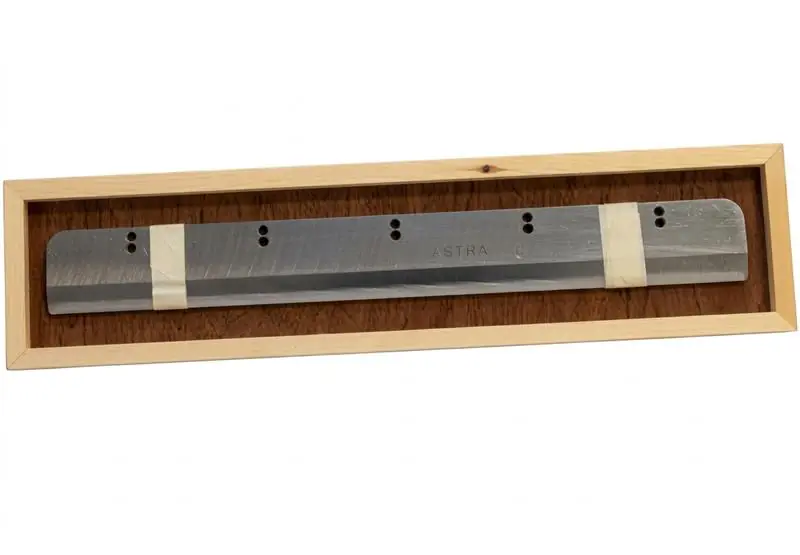
Resharpening makes sense for blades that are dulled through normal wear but are otherwise in good structural condition. These include no chips, no cracks, and no significant uneven wear. A professionally resharpened guillotine blade can restore cutting performance to near-original levels at a lower cost than a full replacement. However, each resharpening removes a small amount of blade material, and there is a limit to how many times a blade can be resharpened before it becomes too short to function correctly.
Replacement is the right choice when the blade is chipped, cracked, or has been resharpened to the point where it no longer seats properly in the machine. It is also worth considering that a new guillotine blade, particularly one sourced from a quality UK supplier, will deliver better and more consistent performance than a heavily resharpened blade working at the margins of its usable life.
When purchasing replacement guillotine blades, always ensure compatibility with your specific machine model. Blade dimensions, steel grade, and edge geometry vary between manufacturers. Fitting the wrong blade not only affects cutting quality but can also void your machine’s warranty.
Where to Source Guillotine Blades and Cutting Sticks in the UK
At GAPS UK, we supply guillotine blades and cutting sticks for a wide range of paper guillotine models, alongside our full range of print finishing machinery. Whether you need a direct replacement blade for your current machine or guidance on the right cutting sticks for your setup, our team is on hand to help.
We understand that downtime costs money. That’s why we aim to make sourcing replacement guillotine blades and cutting sticks as straightforward as possible for UK print businesses with knowledgeable support and fast delivery as standard.
Browse our guillotine blades and cutting sticks at gapsuk.com, or call us on 01376 335 150 to speak with a member of our team.
Frequently Asked Questions
How do I know when my guillotine blade needs replacing?
The most common signs include ragged or feathered edges on cut paper, increased resistance during cutting, paper shifting mid-cut, and visible nicks or chips along the blade edge. If you notice any of these issues, it is worth inspecting your guillotine blade and cutting stick before running further jobs.
How long do guillotine blades last?
Guillotine blade lifespan varies depending on cutting volume, paper stock, and maintenance habits. High-volume print shops may need to inspect and replace blades every one to three months. Regularly rotating your cutting sticks is one of the most effective ways to extend the life of your guillotine blade.
Should I resharpen or replace my guillotine blade?
Resharpening is a cost-effective option for blades that are dulled through normal use but are otherwise in good condition. However, if your guillotine blade is chipped, cracked, or has been resharpened multiple times, full replacement is the better investment. Always ensure any replacement blade is compatible with your specific guillotine model.